


Kacip Fatimah: Top Benefits, Uses & Proper Dosage Recommendations

Jan 20, 2025
7 min read
Updated: Apr 8

Kacip Fatimah: Evidence-Informed Insights Into a Traditional Malaysian Herb for Women’s Health
If you are looking for a natural way to support women’s health and overall well-being, Kacip Fatimah may be a valuable herbal ally worth understanding. Known scientifically as Labisia Pumila, Kacip Fatimah is a traditional Malaysian herb that has been used for generations, particularly among women, for reproductive and hormonal support. Today, it continues to attract interest for its potential role in hormonal balance, menopause support, and general wellness.
This article explores what Kacip Fatimah is, how it has traditionally been used, its potential benefits, and commonly referenced dosage ranges.
What Is Kacip Fatimah?
Kacip Fatimah (Labisia Pumila) is a small flowering plant native to the tropical rainforests of Malaysia. It grows naturally in shaded, humid environments and has long been incorporated into traditional Malay herbal practices.
Historically, Malaysian women have used this herb as part of postpartum care, menstrual regulation, and general female vitality. Its continued use reflects cultural knowledge passed down through generations, particularly among rural and indigenous communities.

Traditional and Common Uses of Kacip Fatimah
Kacip Fatimah which primarily contains phytoestrogen, is renowned for its diverse uses, particularly in promoting women's health is often associated with women’s reproductive and hormonal health. Many of its uses are rooted in traditional practice rather than modern clinical medicine, and should be understood within that context.

Active Compounds and How They May Work
Laboratory studies show that Kacip Fatimah contains several natural compounds, including:
Flavonoids and phenolic compounds
Saponins
Other plant antioxidants

These compounds help explain why the plant has strong antioxidant activity, meaning it can help protect cells from damage caused by oxidative stress. Some of these compounds also act as phytoestrogens. Phytoestrogens are plant-derived compounds capable of interacting with estrogen receptors. While their activity is weaker than endogenous estrogen, they may modulate estrogenic effects, which explains the herb’s traditional association with hormonal balance and menopause support. Their effects are generally mild and supportive rather than strong or drug-like.

1. Postpartum Recovery
Traditionally, Kacip Fatimah has been consumed after childbirth to support recovery. It is believed to help tone the uterus, support uterine contraction, reducing post-delivery bleeding and assist women in regaining strength following delivery. These practices are based on traditional knowledge rather than standardized medical treatment and are typically used as supportive care. While direct clinical studies in postpartum women are limited, animal studies provide some insight
In research using ovariectomised rats (a common model for low-estrogen states), Kacip Fatimah was shown to influence reproductive hormone levels, including lowering certain hormones and increasing estradiol. These findings help explain why the herb has long been linked to recovery after major hormonal changes, though human studies are still needed.

2. Menstrual Cycle Regulation
Kacip Fatimah has long been used to help regulate menstrual cycles and reduce discomfort associated with menstruation. Its proposed mechanism involves hormonal modulation and anti-inflammatory activity. Women experiencing irregular cycles or menstrual cramps have traditionally turned to this herb to promote balance and comfort during their monthly cycle. It helps reduce the severity of menstrual cramps and discomfort, making the monthly cycle more manageable.

3. Hormonal Balance
Due to its phytoestrogenic profile, Kacip Fatimah is often explored as a complementary botanical for women experiencing estrogen-related imbalances.
Traditionally, Kacip Fatimah is believed to help balance hormones, particularly estrogen, which can be beneficial for women experiencing symptoms of hormonal imbalance such as irregular periods. It helps regulate estrogen levels, which can alleviate symptoms associated with menstrual irregularities and menopause. By maintaining balanced hormone levels, Kacip Fatimah helps manage symptoms like mood swings, hot flashes, irregular periods, weight gain, and fatigue contributing to overall hormonal health. Some women with conditions involving hormonal imbalance, including PCOS, seek it as a complementary approach, though it should not replace medical care for hormonal or endocrine conditions.

4. Menopause Relief
Menopause is marked by a natural drop in estrogen and may come with symptoms such as hot flashes, mood changes, night sweats, and shifts in cholesterol levels. Kacip Fatimah is commonly used as a natural option to support women during this transition. By traditionally supporting hormonal equilibrium, the herb may help ease menopausal discomfort for some women.
Some small human studies have examined Kacip Fatimah in postmenopausal women. In one six-month study, women who took a standardized extract experienced lower triglyceride levels compared with those taking a placebo, although hormone levels changed only slightly. Several other studies suggest that Labisia Pumila supplementation may help reduce hot flashes and improve quality-of-life indicators.

5. Libido Enhancement
In traditional use, Kacip Fatimah is also associated with female vitality and sexual wellness. While Kacip Fatimah is not a stimulant or fast-acting aphrodisiac, it may support libido by gently addressing underlying factors that influence sexual desire, particularly in women. The herb contains phytoestrogens, which are plant compounds that weakly interact with estrogen receptors and may help support estrogen-related functions such as vaginal comfort and arousal.
In addition, its antioxidant and anti-inflammatory properties may help reduce fatigue and physical stress, both of which commonly suppress libido. Traditional use and early research also suggest benefits for mood and overall well-being, allowing desire to return naturally over time. For this reason, any libido-related effects of Kacip Fatimah are typically gradual, subtle, and most noticeable during periods of hormonal change such as postpartum recovery or menopause.

6. Antioxidant and Anti-Inflammatory Support
Antioxidants help neutralize free radicals that can contribute to chronic disease and premature aging. The antioxidant activity of Kacip Fatimah supports cellular health and overall well-being. Kacip Fatimah has shown strong antioxidant activity in laboratory tests, which supports its traditional use as a general wellness herb.
Traditional use also points to anti-inflammatory effects. Chronic inflammation is linked to several health issues, such as joint discomfort, arthritis, cardiovascular diseases, and autoimmune disorders. Chronic inflammation is associated with and long-term health concerns, and herbs with anti-inflammatory properties are often used to support joint and tissue health.
7. Anti-Aging & Skin Health
Kacip Fatimah contains antioxidant compounds that help protect cells from oxidative stress caused by free radicals. Antioxidants play a role in supporting skin health and may contribute to a more youthful appearance by helping reduce environmental and oxidative damage. With its antioxidant properties, Kacip Fatimah can help protect the skin from aging and environmental damage.
Antioxidants fight free radicals, which are harmful molecules that can cause skin aging and deterioration. By incorporating Kacip Fatimah into their routine, some women aim to maintain youthful, healthy skin.

8. Digestive Comfort
Some traditional preparations include Kacip Fatimah to support digestion, helping with bloating, gas, or mild digestive discomfort. These effects may be linked to the herb’s anti-inflammatory and smooth muscle–modulating properties, although clinical validation remains limited
Dosing of Kacip Fatimah
Recommended Dosage of Kacip Fatimah
Kacip Fatimah is available in several forms, including capsules, tea, powdered extracts, and ready-to-drink beverages. Dosage depends on the form used and individual health needs.
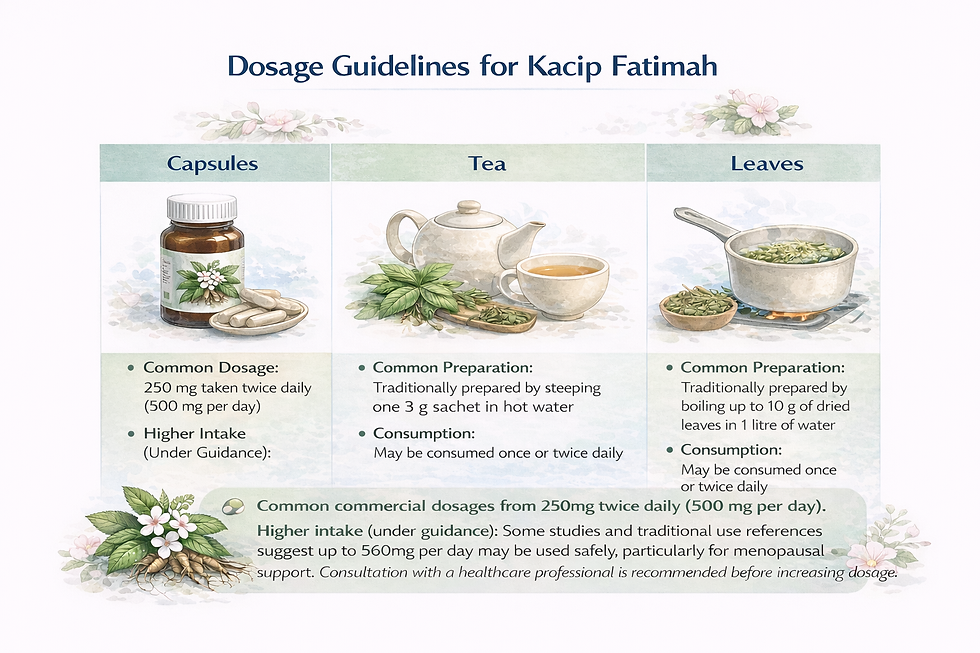
Capsules: Common commercial dosages range from 250mg twice daily (500 mg per day). Higher intake (under guidance): Some studies and traditional use references suggest up to 560mg per day may be used safely, particularly for menopausal support. Consultation with a healthcare professional is recommended before increasing dosage.
Tea: Typically prepared by steeping approximately 3 grams of dried herb in boiling water. This may be consumed once or twice daily
Leaves: Traditionally prepared by boiling up to 10 g of dried leaves in 1 litre of water. The herbal drink may be consumed once or twice daily.
Always follow manufacturer guidelines and consult a healthcare provider, especially if pregnant, breastfeeding, or managing medical conditions. Kacip Fatimah is available in several forms, including capsules, tea, and canned beverages, and the dosage can vary based on the product and intended use.
For capsules, a common dosage is 250mg taken twice daily, which totals 500 mg per day. This dosage is typically effective for general health maintenance and is widely used in many commercial Kacip Fatimah supplements. For those seeking a higher dose, particularly for managing menopausal symptoms, studies have shown that dosages of up to 560mg per day can be safe. However, it’s essential to consult with a healthcare provider before exceeding the standard dosage.
When it comes to Kacip Fatimah tea, the usual preparation involves steeping 3 grams of the dried herb in a cup of boiling water. This tea can be consumed once or twice a day, depending on personal health goals and the advice of a healthcare professional.
Kacip Fatimah leaves often come with their own specific dosage instructions, so it's important to follow the guidelines provided by the manufacturer for these products.
Drug Interactions and Safety Considerations
Safety and Drug Interaction Considerations Kacip Fatimah is generally regarded as safe when consumed within recommended ranges. However, caution is advised for individuals:
Taking hormone-related medications
Managing endocrine disorders
Pregnant or breastfeeding
Potential interactions with estrogen-sensitive therapies should be evaluated by a qualified healthcare provider. While Kacip Fatimah is generally considered well-tolerated, individuals taking hormone-related medications or managing chronic conditions should seek medical advice before use. Herbal supplements can interact with medications or underlying health conditions.
Conclusion
Kacip Fatimah is a deeply rooted traditional Malaysian herb with a long history of use in women’s health. From postpartum support and menstrual regulation to menopause comfort and antioxidant protection, its traditional applications remain relevant today.
Kacip Fatimah offers a whole other range of benefits due to its natural properties, making it a valuable addition to a health and wellness routine. The herb plant is a natural alternative to synthetic medications, which makes it a popular choice for those seeking herbal treatments.
Unlike many conventional medicines that might come with side effects, Kacip Fatimah is a plant-based remedy that has been used for centuries in traditional medicine. This herb is often preferred by individuals who are looking for natural ways to support their health and manage various conditions. Its natural origins also align well with a holistic approach to wellness, focusing on balance and harmony in the body.
Understanding its proper use, realistic benefits, and safe dosage allows individuals to approach this herb with respect for both traditional wisdom and modern health considerations. Always consult a qualified healthcare professional to ensure it aligns with your personal health goals.
Peer-Reviewed Citations
Chua LS et al. Phytochemical constituents and antioxidant capacity of Labisia pumila. Journal of Medicinal Plants Research.
Jamal JA et al. Estrogenic activity of Labisia pumila extracts in ovariectomised rats. Journal of Ethnopharmacology.
The Effect of Labisia pumila var. alata on Postmenopausal Women: A Pilot Study. ResearchGate.
A Randomized Trial of Labisia pumila and Eurycoma longifolia on Menopausal Symptoms. PubMed.
Safety and efficacy of a Labisia pumila extract on lipid profile of pre- and postmenopausal women. ResearchGate.


Comments