


Tongkat Ali and Cold & Flu: Bridging Science with Everyday Wellness

Apr 7
4 min read
Updated: Apr 8

Upper respiratory tract infections, including the common cold and influenza, remain among the most prevalent acute illnesses globally. Despite advances in antiviral therapies and vaccines, interest continues to grow in adjunctive botanical interventions that may support immune resilience and symptom mitigation. One such botanical is Eurycoma Longifolia, commonly known as Tongkat Ali, a traditional Southeast Asian medicinal plant.
Historically used by indigenous communities, Tongkat Ali has been associated with vitality, fever reduction, and immune support. This article evaluates its potential relevance in the context of cold and flu through a scientific lens, integrating ethnobotanical knowledge with contemporary research.
Phytochemical Composition of Tongkat Ali
Tongkat Ali contains a diverse range of bioactive compounds, including:
Quassinoids (e.g., eurycomanone) → linked to anti-inflammatory and immune effects
Flavonoids → act as antioxidants that protect cells
Alkaloids → support overall physiological balance
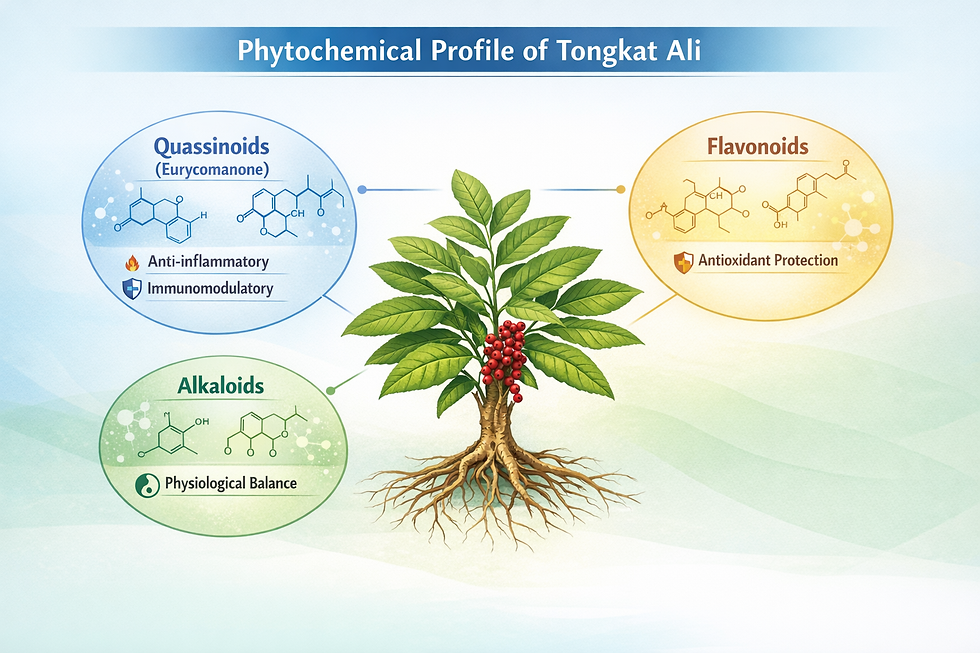
These compounds help your body stay balanced and respond better when you're sick.
1. How It Supports Your Immune System
Your immune system is your body’s defense team. Several studies indicate that Tongkat Ali may influence immune function by:
Enhance T-cell activity (important for fighting infections)
Increase natural killer (NK) cell function
Help regulate cytokines (immune signaling molecules)
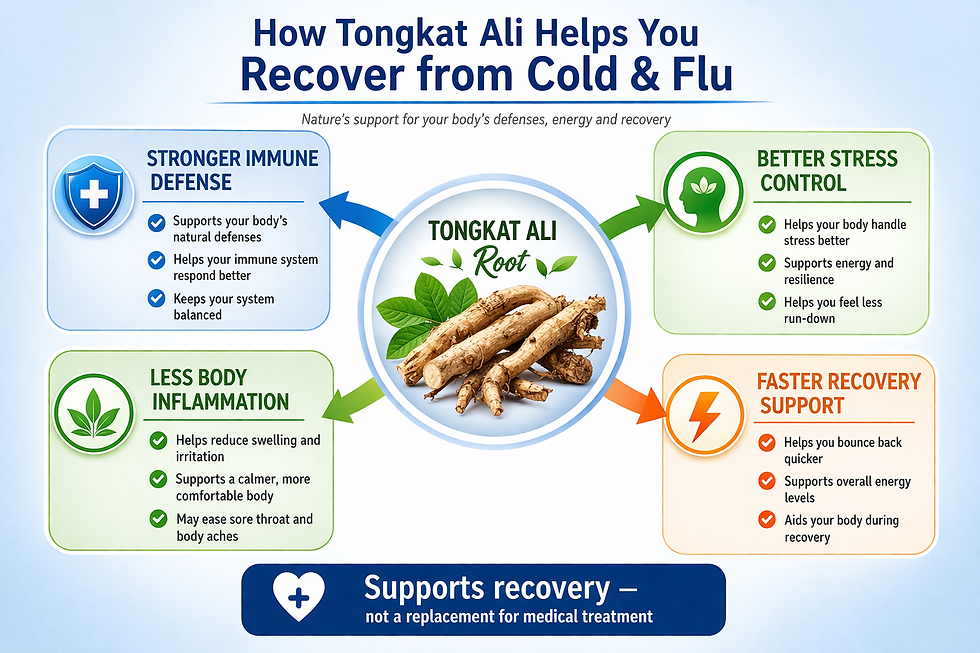
This action indicates an immunomodulatory effect; it helps the immune system respond appropriately without overreacting. A balanced immune response is critical in combating viral infections such as rhinoviruses and influenza viruses. Instead of “boosting” your immune system aggressively, Tongkat Ali helps it work more efficiently and in balance, which is important when dealing with viral infections like cold and flu.
2. Stress, Fatigue, and Immunity
Chronic stress is known to impair immune defense. Tongkat Ali is classified as an adaptogen, as shown in studies to:
Reduce cortisol (stress hormone)
Improve mood and stress resilience
By mitigating stress, it may indirectly enhance the body’s ability to resist infections. Chronic stress is known to weaken immune defense, making infections more likely. If you’re run down, stressed, or not sleeping well, Tongkat Ali may help your body recover faster and resist illness better.
3. Anti-Inflammatory Effects and Symptom Relief
Inflammation is a hallmark of both cold and flu symptoms, contributing to sore throat, nasal congestion, and systemic discomfort.
Cold and flu symptoms are largely driven by inflammation. Tongkat Ali has been shown to:
Reduce pro-inflammatory cytokines such as TNF-α and IL-6
Influence inflammatory pathways in the body
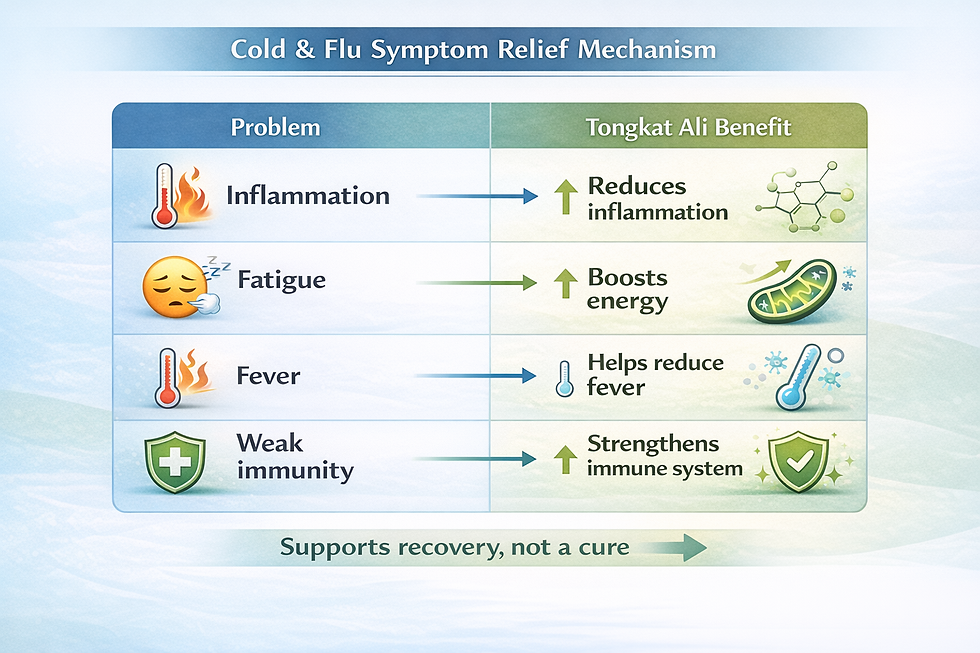
Such remedies may help ease body aches, reduce discomfort, and support overall recovery.
4. Antipyretic and Symptom Relief Potential
Traditional use of Tongkat Ali includes treatment of fever. Preliminary evidence supports:
Mild antipyretic (fever-reducing) properties
Improvement in energy metabolism and fatigue levels
While not a replacement for standard care, these properties may contribute to overall symptom management during viral illness.
5. Antiviral Considerations
Current evidence for direct antiviral activity in Tongkat Ali is limited. However:
Some in vitro studies suggest inhibitory effects on microbial growth
Its primary benefit likely lies in host-directed mechanisms, rather than direct viral suppression
Thus, Tongkat Ali should be considered a supportive adjunct, not an antiviral treatment. Think of Tongkat Ali as a support system, not a cure. It helps your body fight better; it doesn’t replace medication
Safety and Dosage Considerations
Clinical studies generally report Tongkat Ali as well-tolerated when used within recommended dosages:
Typical extract dosage: 200–400 mg/day
Best taken earlier in the day (can increase energy)
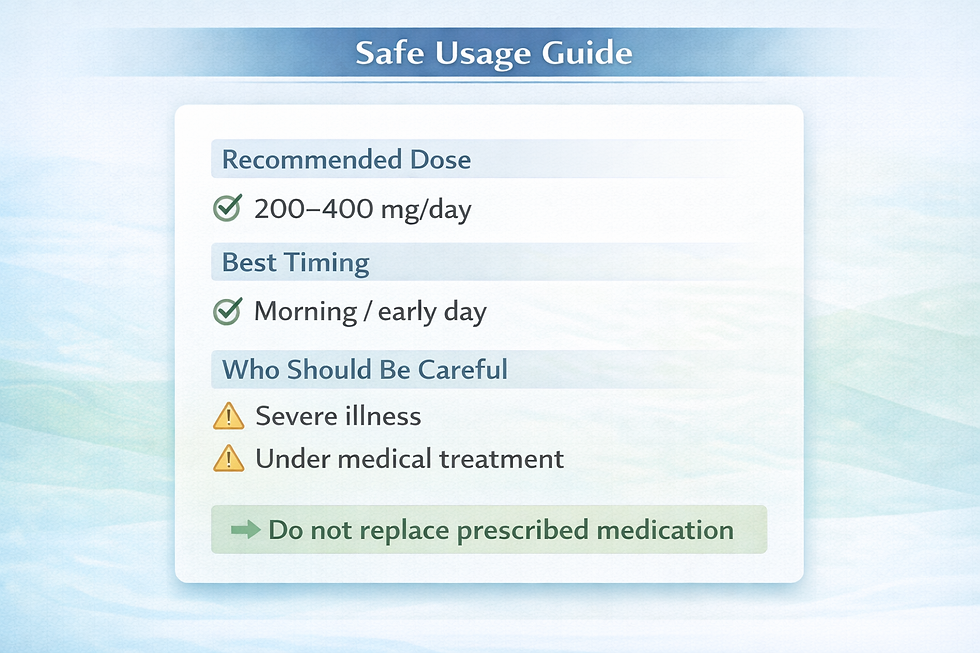
Potential considerations:
Do not replace prescribed treatments
Avoid excessive intake
Seek medical care for severe symptoms
Best Way to Use It During Cold & Flu
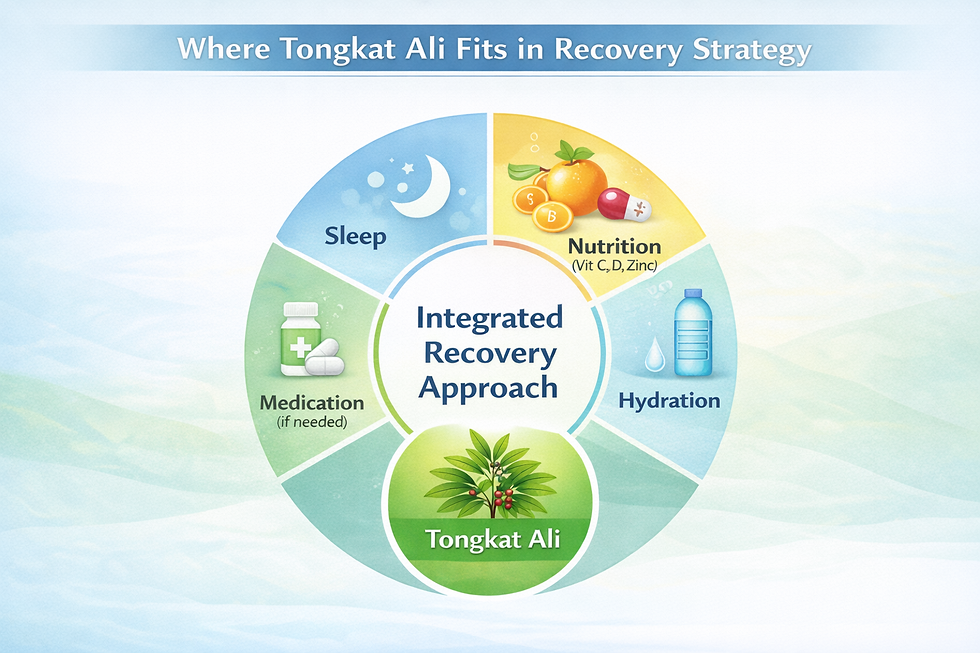
Tongkat Ali may be incorporated into a broader immune-support strategy and works best as part of a complete recovery approach:
Stay hydrated
Get enough sleep
Eat nutrient-rich foods (vitamin C, D, zinc)
Use appropriate medications when needed
Tongkat Ali fits best as a supportive botanical, particularly in individuals experiencing fatigue, stress, or recurrent infections. Think of it as one piece of a bigger recovery strategy.
Limitations of Current Evidence
Limited large-scale human clinical trials specifically targeting cold and flu outcomes
Variability in extract standardization
Need for more mechanistic studies on antiviral pathways
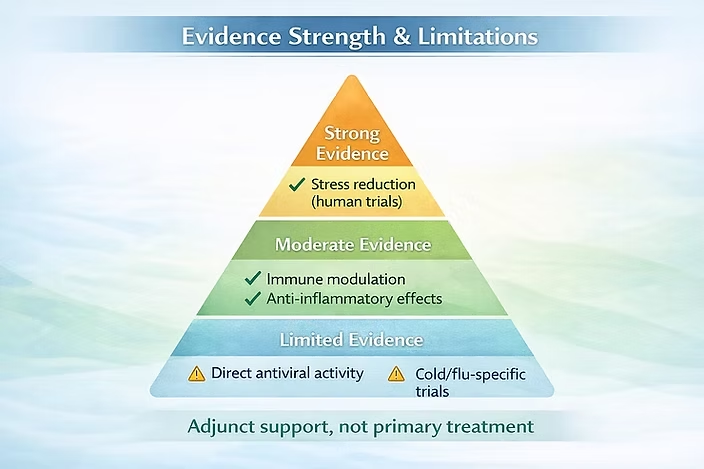
Thus, while promising, its role should be interpreted cautiously within an evidence-informed framework.
Conclusion
Tongkat Ali offers a compelling mix of traditional wisdom and modern science. Its ability to support immune balance, reduce inflammation, and improve stress resilience makes it a valuable supportive herb during colds and flu. However, it is not a cure or replacement for medical care. The most effective approach is to use it alongside proper rest, nutrition, and treatment.
Peer-Reviewed Citations
Talbott SM et al. (2013). Effects of Tongkat Ali on stress hormones and psychological mood state in moderately stressed subjects. Journal of the International Society of Sports Nutrition.
Rehman SU et al. (2016). Pharmacological and toxicological studies of Eurycoma longifolia. Phytotherapy Research.
Low BS et al. (2013). Eurycoma longifolia: Pharmacological importance and applications. Journal of Ethnopharmacology.
George A et al. (2017). Immunomodulatory effects of herbal extracts: Focus on Eurycoma longifolia. Evidence-Based Complementary and Alternative Medicine.
Bhat R & Karim AA (2010). Tongkat Ali (Eurycoma longifolia): A review on its ethnobotany and pharmacological importance. Food Research International.


Comments